
1956 Steinway M — Restoration
Built in 1956, this Steinway M grand piano came to us in a challenging state - the original action had seized up with verdigris, rendering the instrument virtually unplayable. Over the course of eight weeks, every component of the action was addressed in a comprehensive restoration encompassing key rebushing, full keytop replacement, new hammers with hammer shanks and flanges, new wippen assemblies, and a complete restring with new tuning pins and strings. The result is a piano that plays and responds with the precision and warmth that only a properly restored Steinway can deliver.
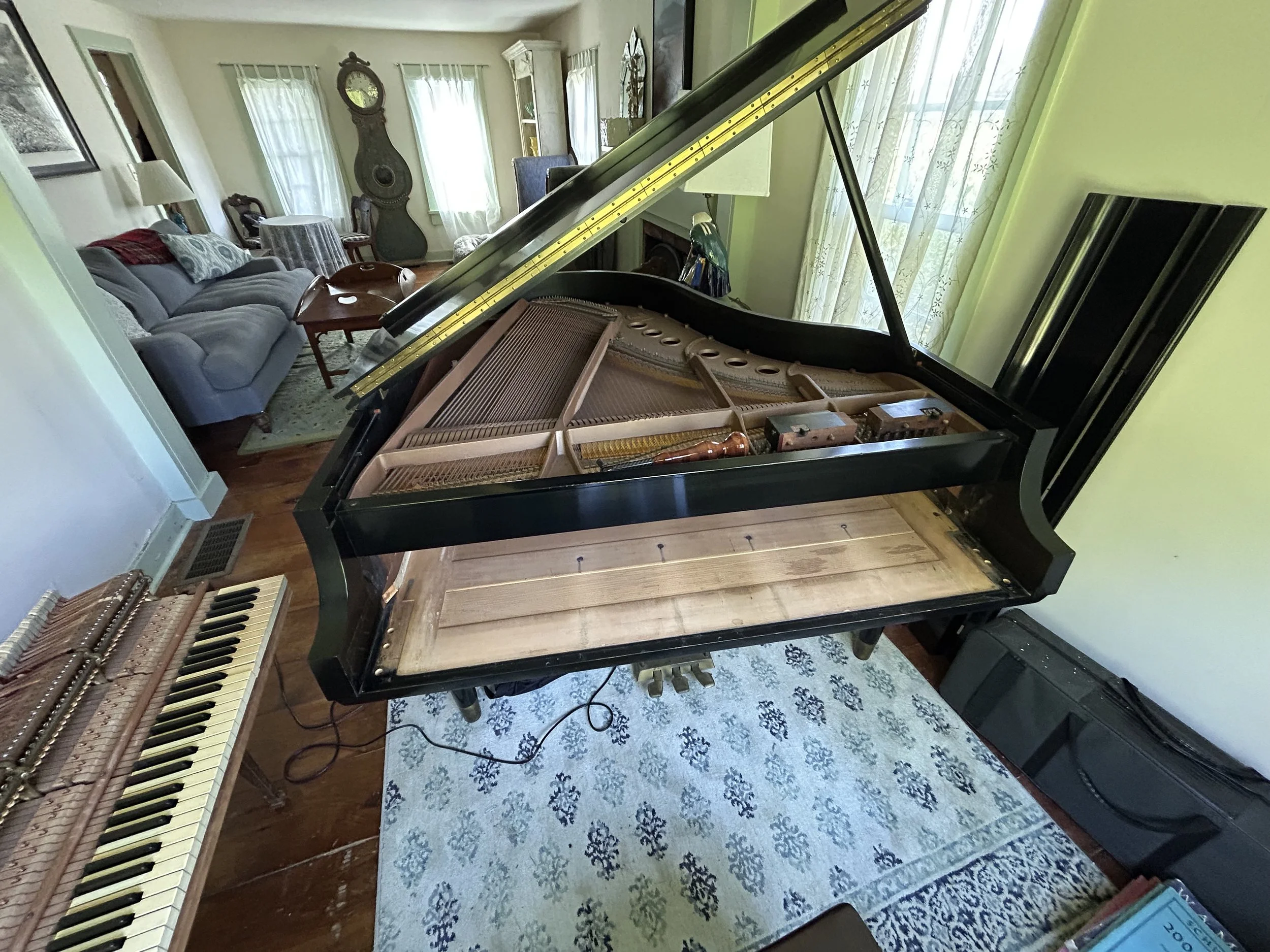
The 1956 Steinway M in its home before restoration begins. With the action removed, this gave an unobstructed view which clearly indicated the need for parts replacement.
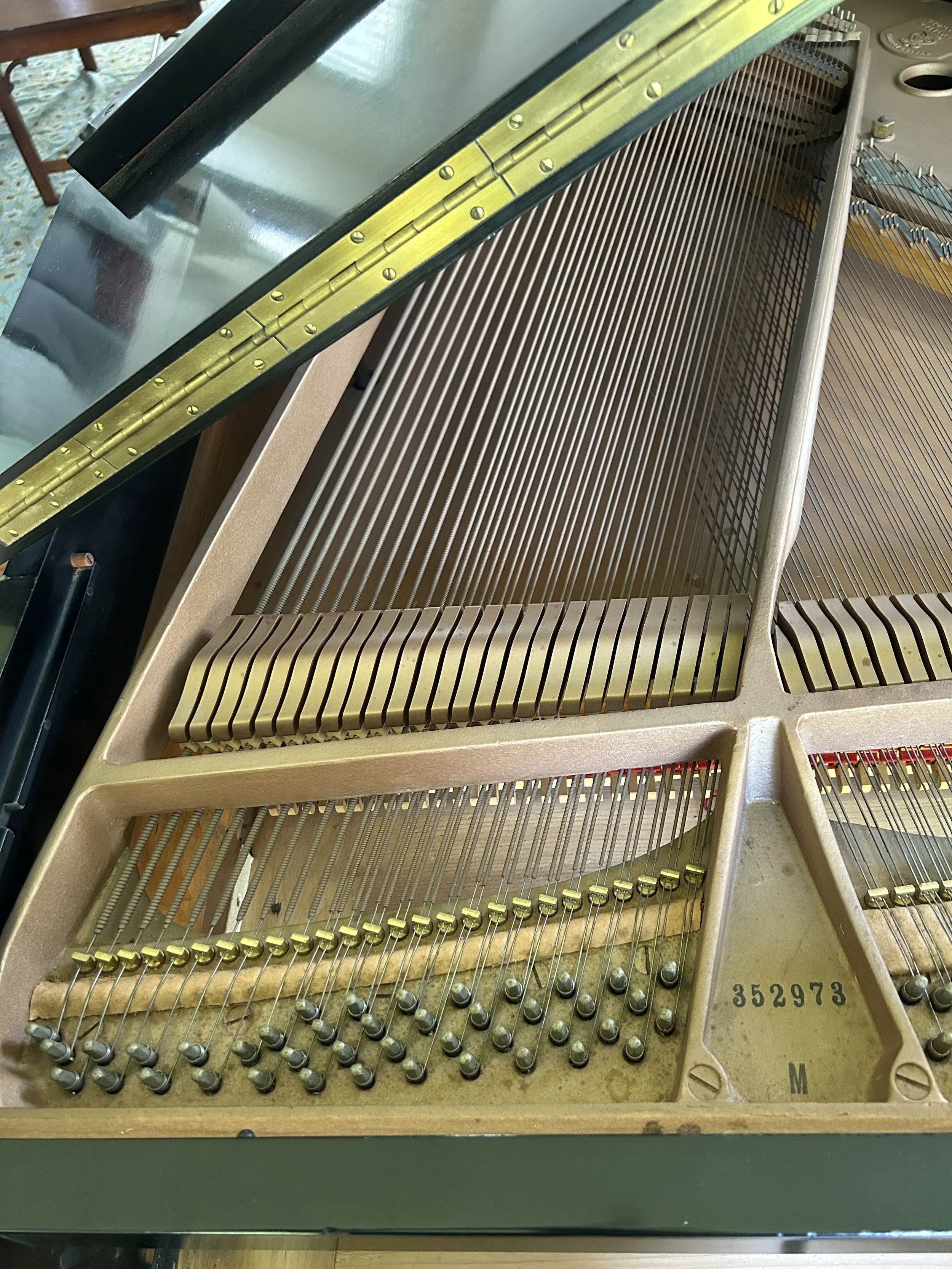
The original strings, tuning pins, and plate of the 1956 Steinway M. The serial number visible in the lower right marks this instrument’s birth year at 1956, making it nearly 70 years old at the time of restoration.
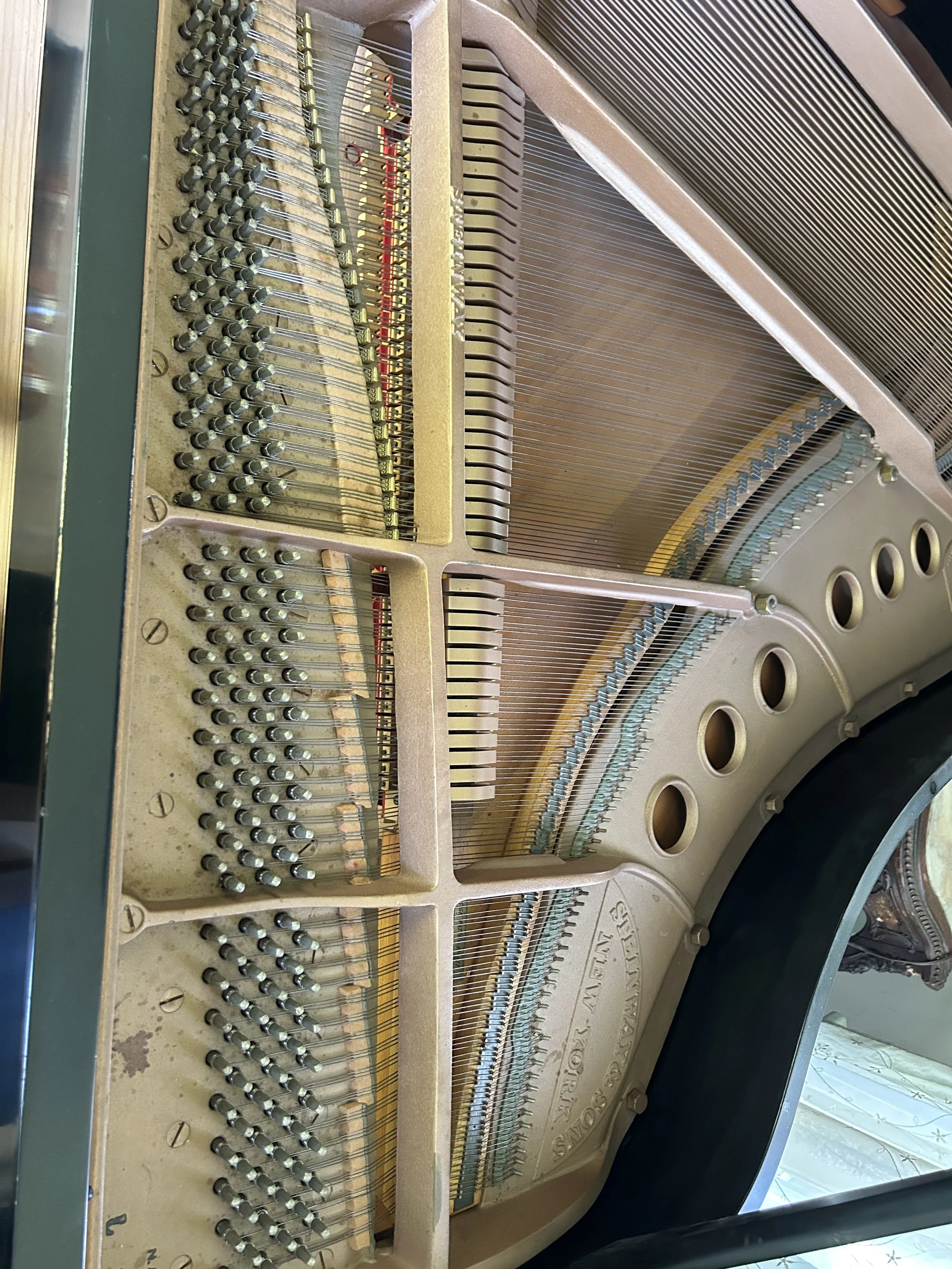
The original strings, tuning pins, and plate hardware in their pre-restoration condition.
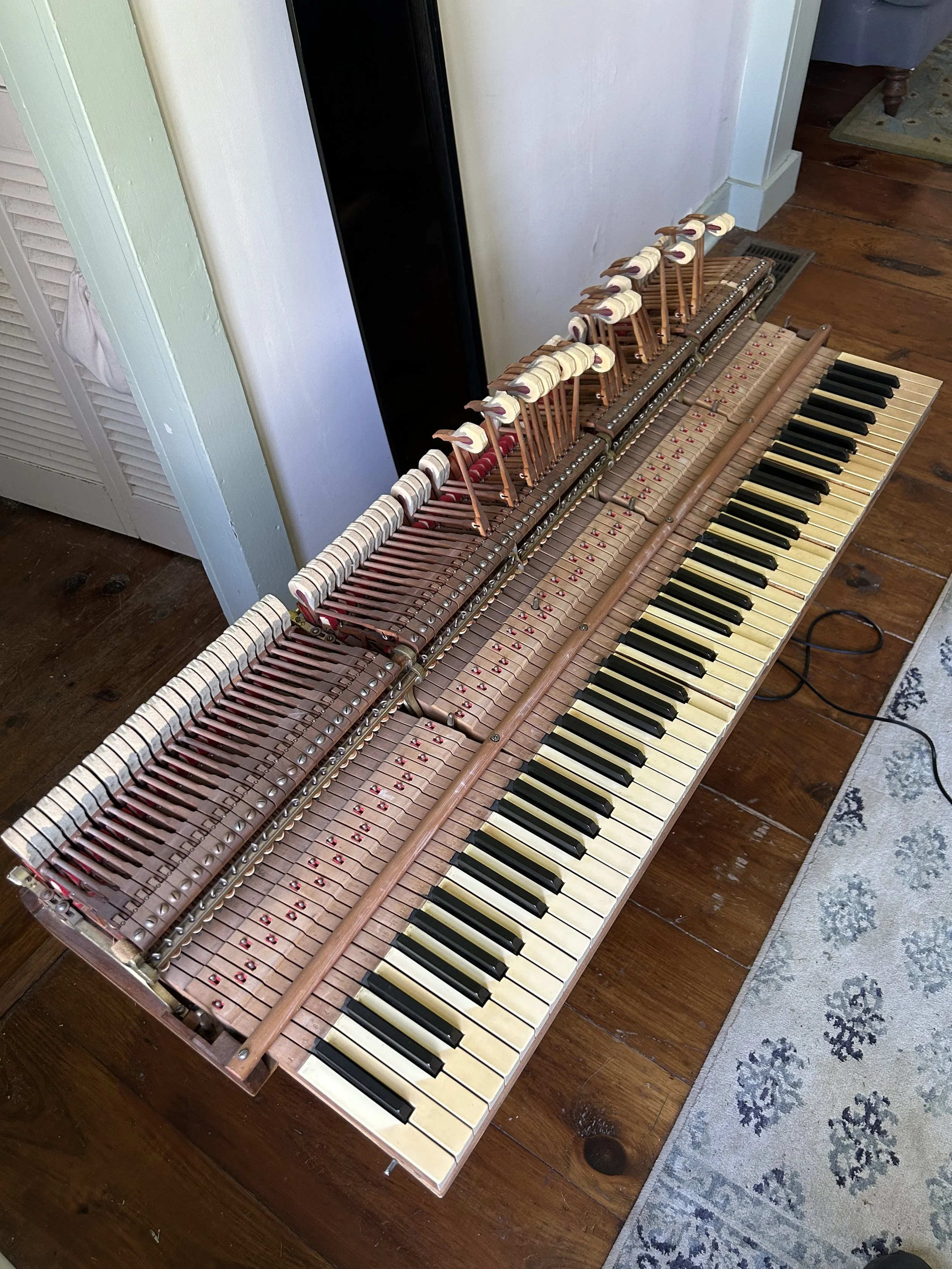
The original action laid out on the piano bench, revealing the extent of the deterioration. The raised hammer groups clearly show flanges completely seized by verdigris - the corrosion that had rendered the action unable to function, preventing the hammers from returning to their resting position under their own weight. This is what unplayable looks like.
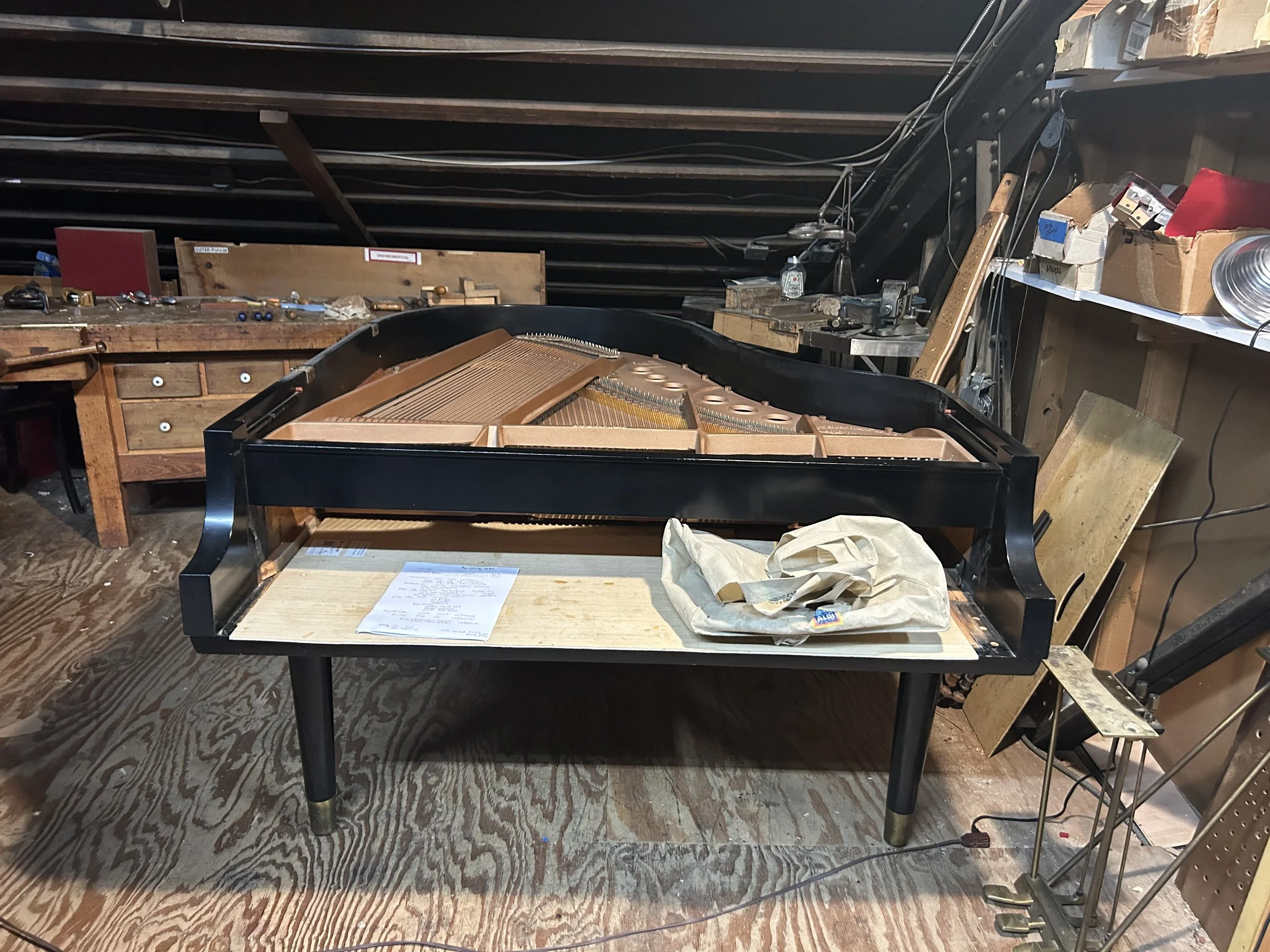
The 1956 Steinway M arrives at our dedicated piano workshop, ready for the extensive work ahead.
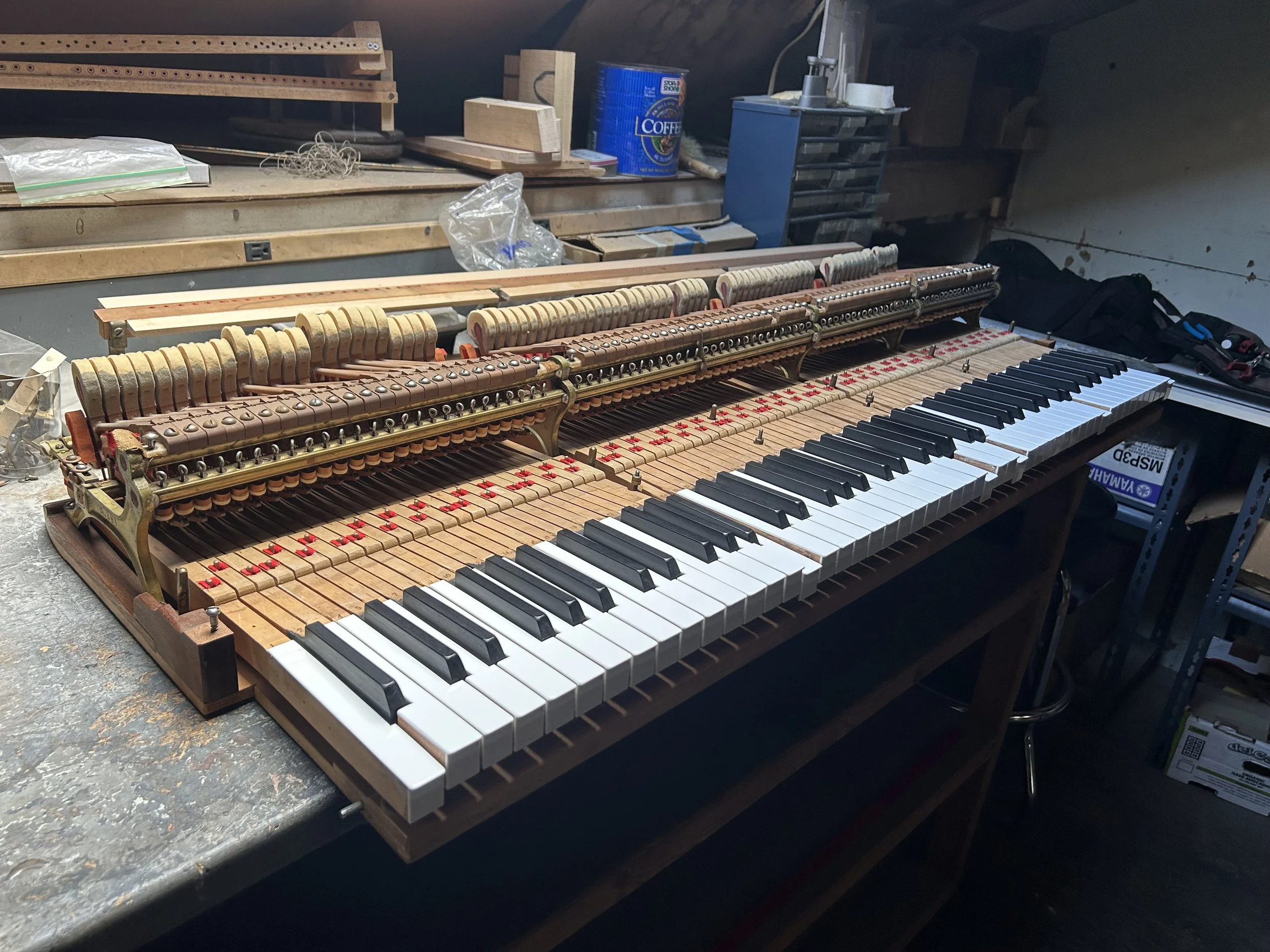
The original action, with the restored keyboard already in place below. The depressed keys correspond to the hammers temporarily removed and sent to a specialist for duplication. This is a necessary first step before the full action replacement could begin.
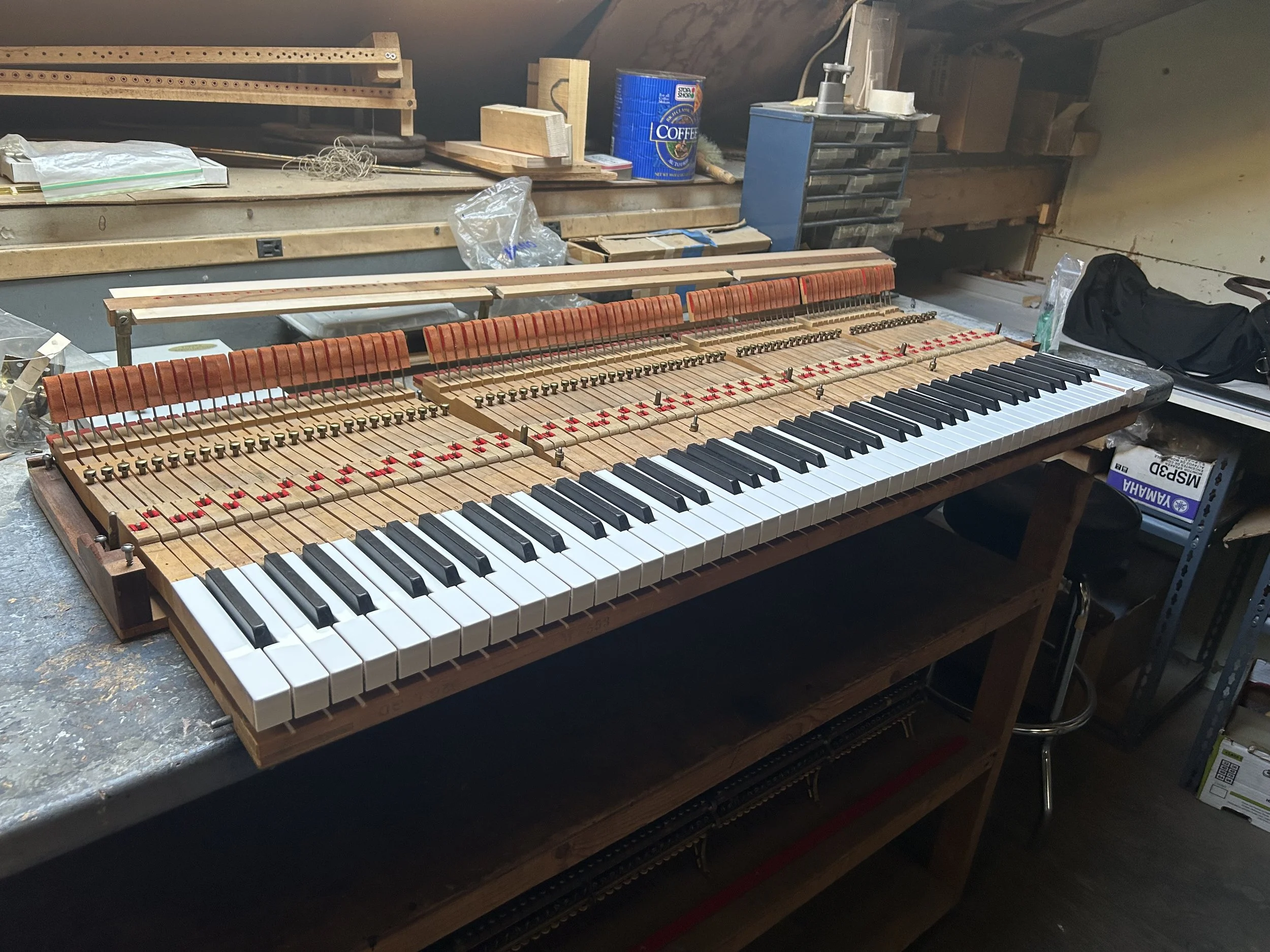
The newly rebushed and rekeytoped keyboard with the action stack temporarily removed. Fresh white acrylic keytops and new ebony black keys bring the keyboard back to its original elegance.
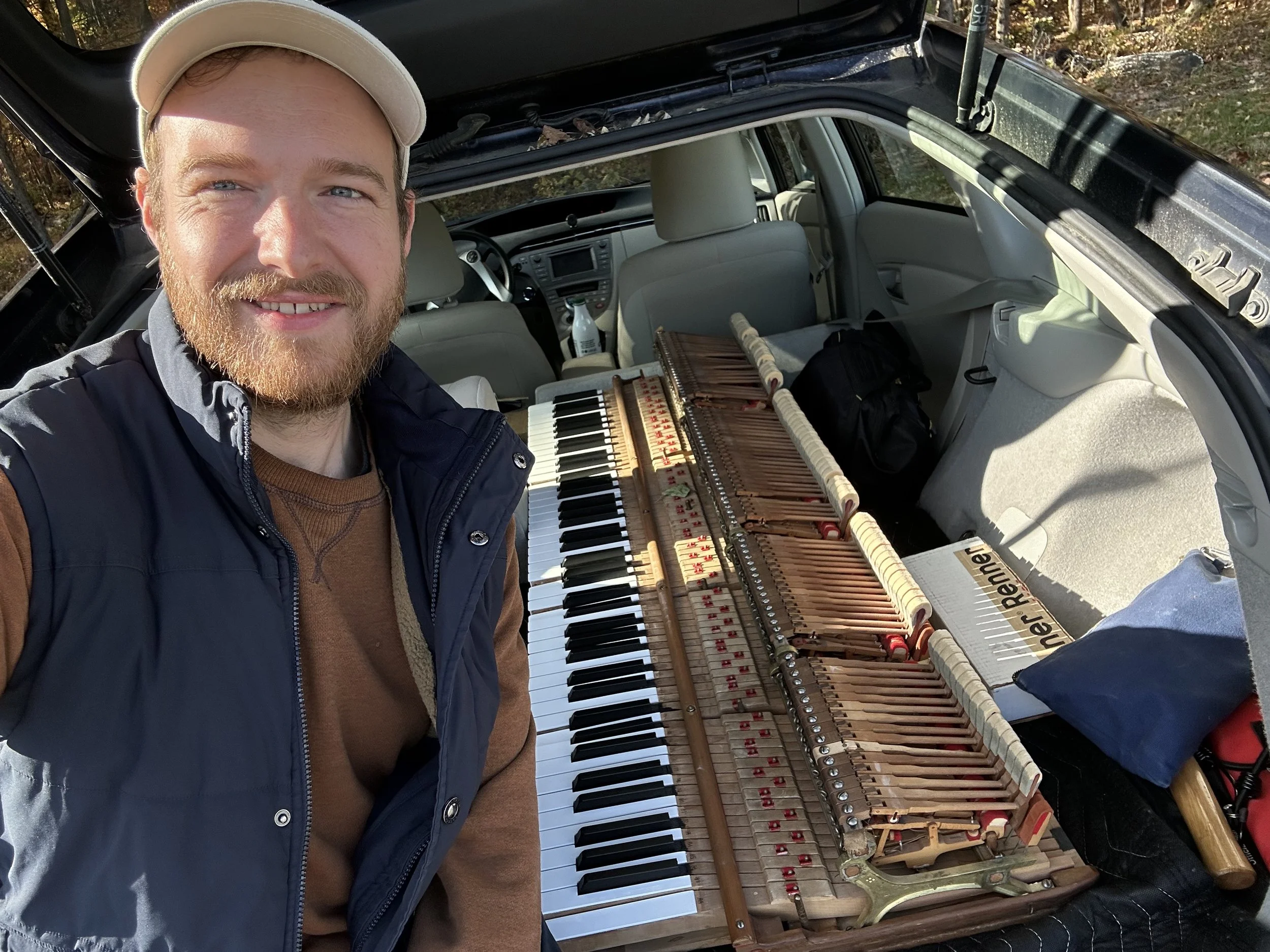
The action carefully loaded for transport. Every stage of this restoration was handled with care, including getting the parts safely where they needed to go.
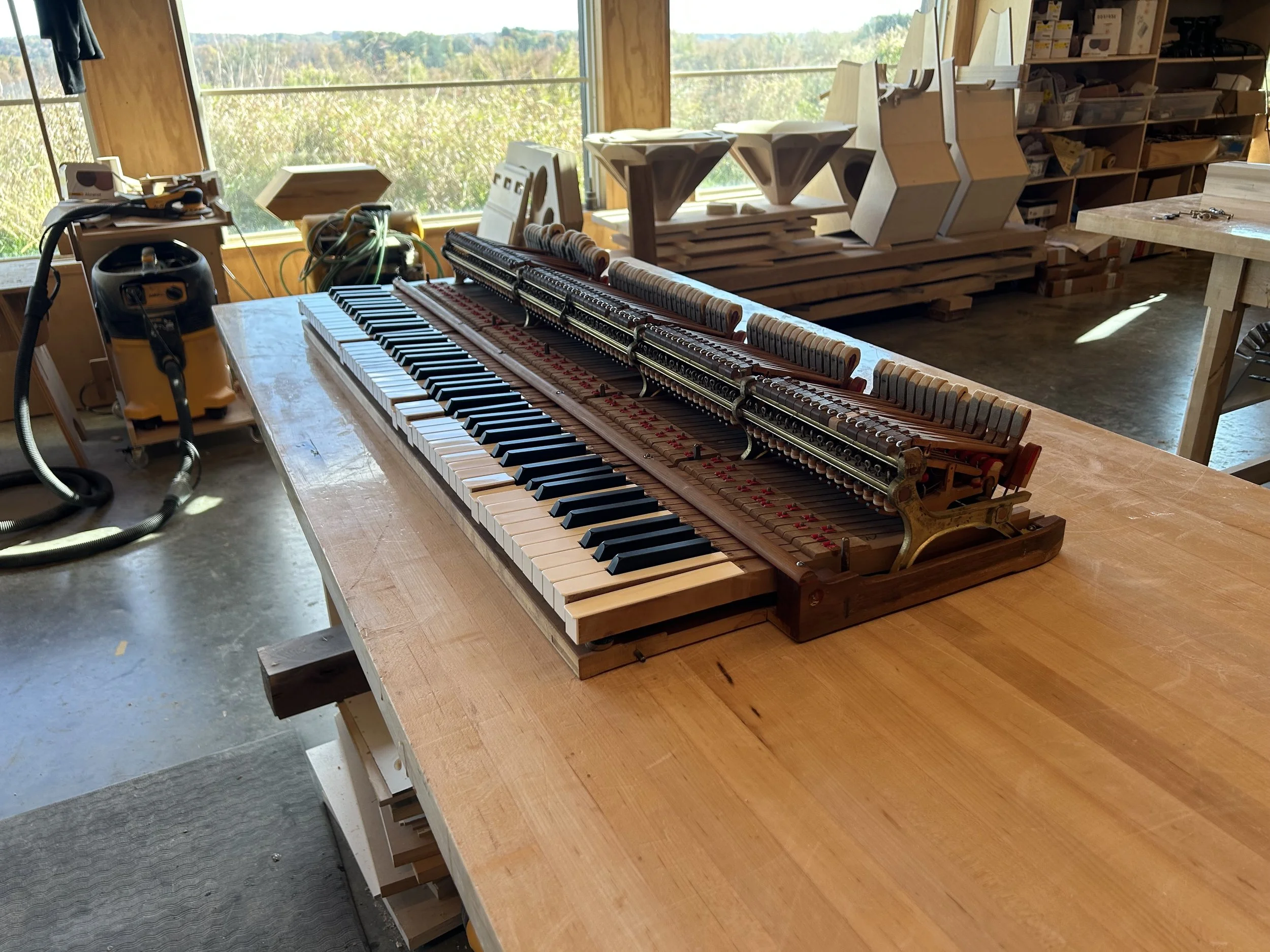
The action laid out in the workshop prior to the installation of new hammers and wippens.
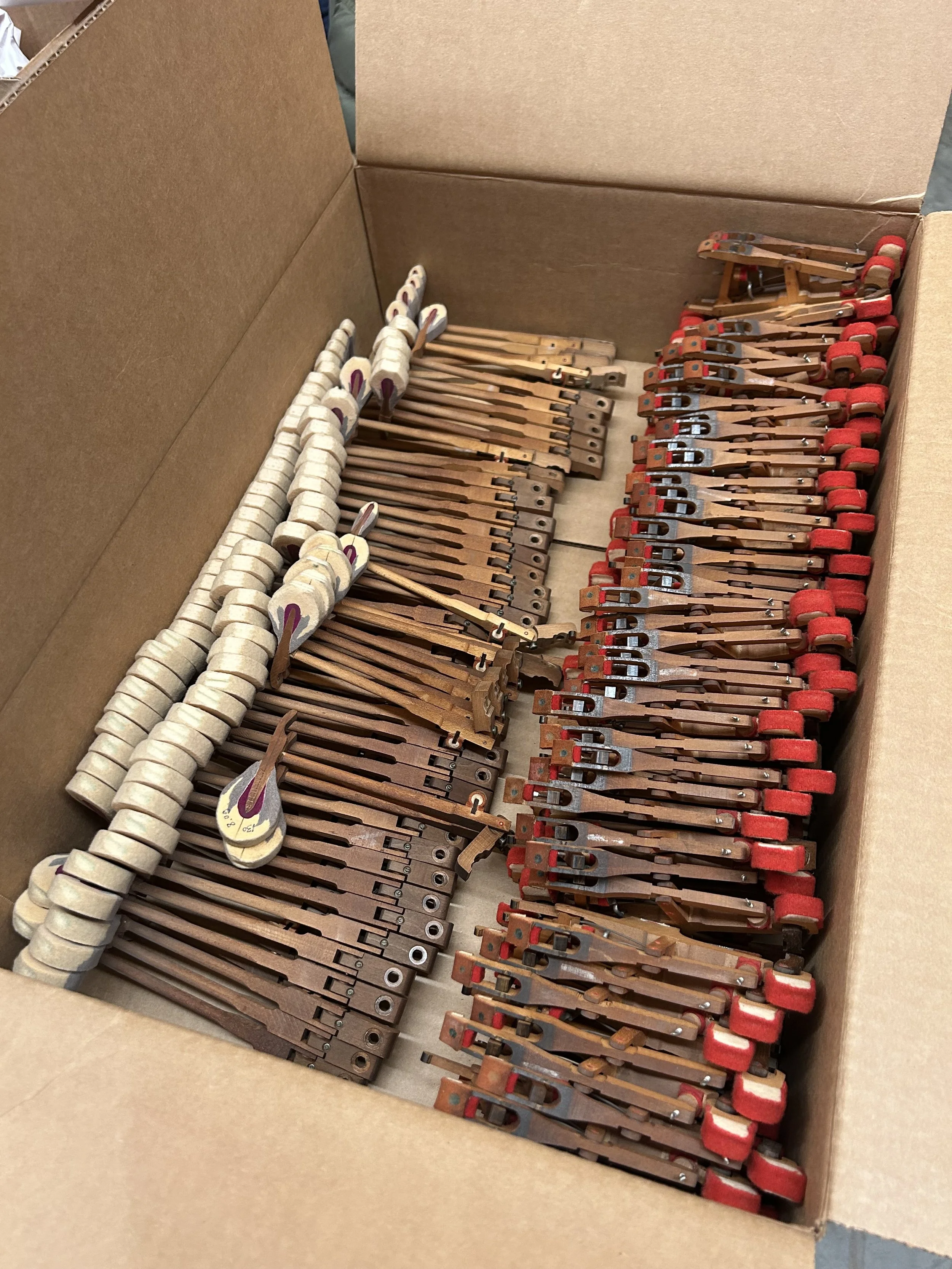
The original hammers and wippens removed - nearly 70 years of service represented in a single box.
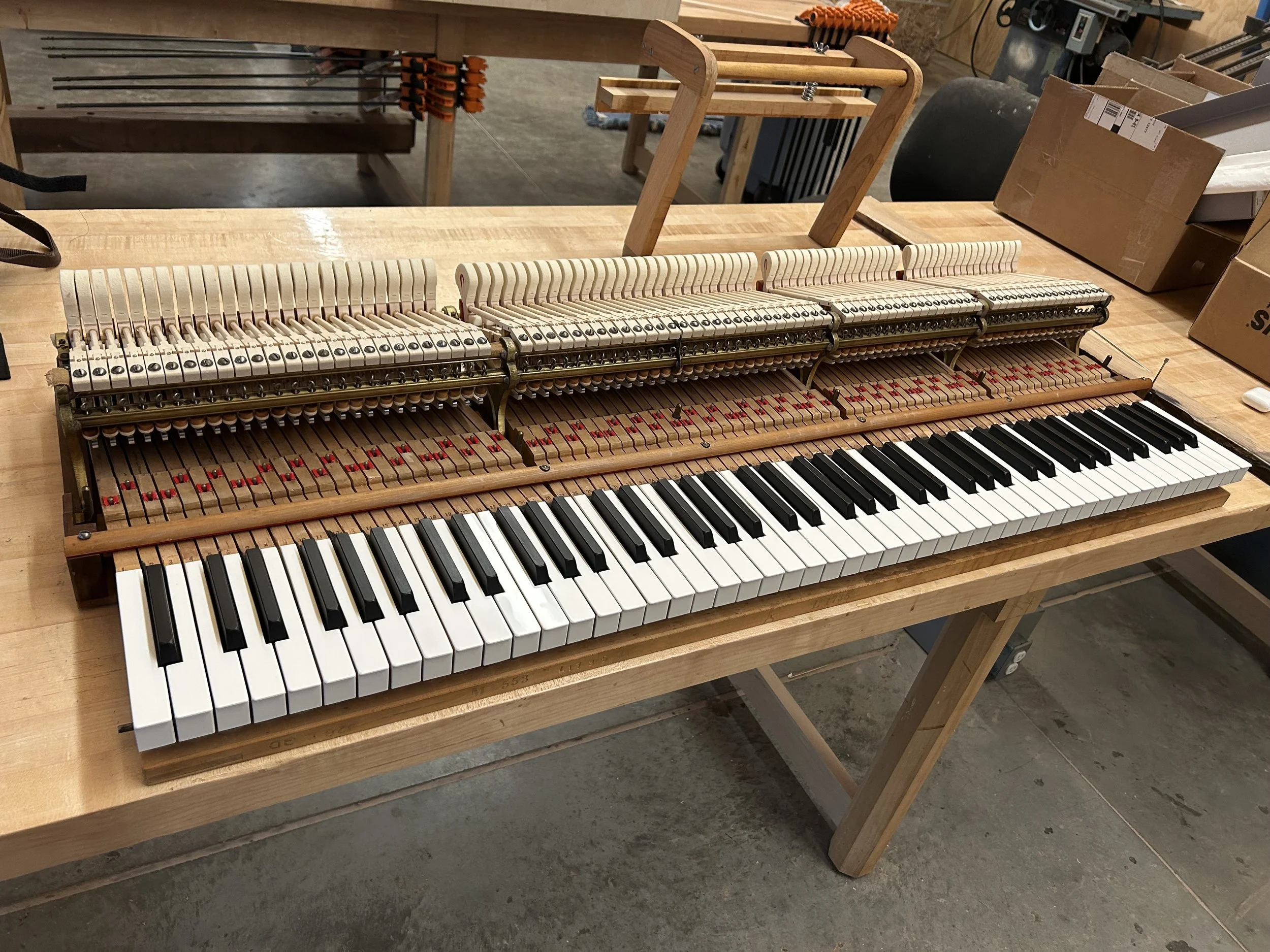
The fully restored action. New hammers, shanks, flanges, and wippen assemblies installed alongside the rebushed and rekeytopped keyboard. Every component working in precise harmony, ready to be reinstalled in the instrument.
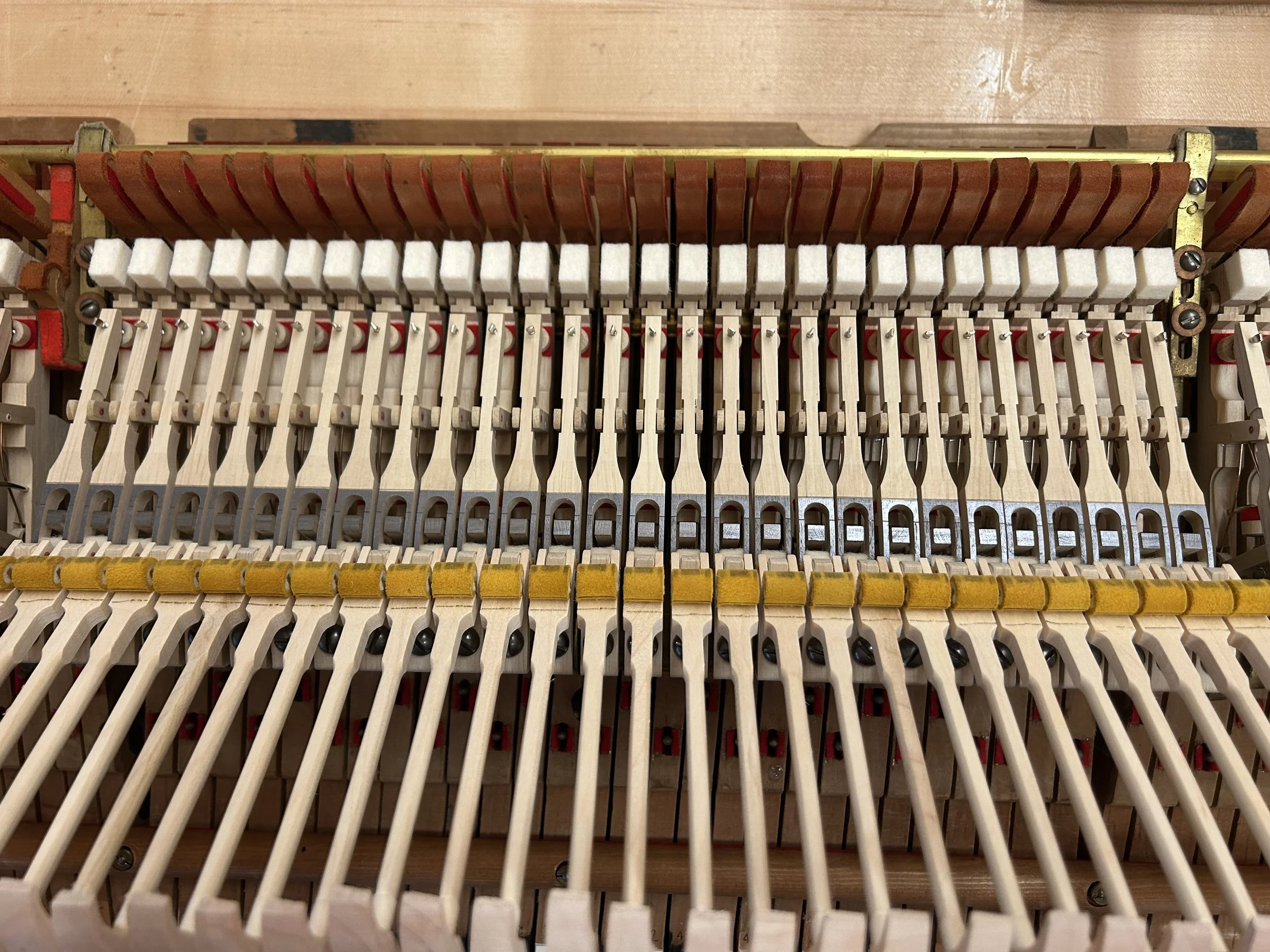
A close look at the freshly installed wippen assemblies. These are the intricate mechanical components responsible for translating each keystroke into precise hammer movement. New wippens restore the action’s sensitivity and responsiveness across every note.
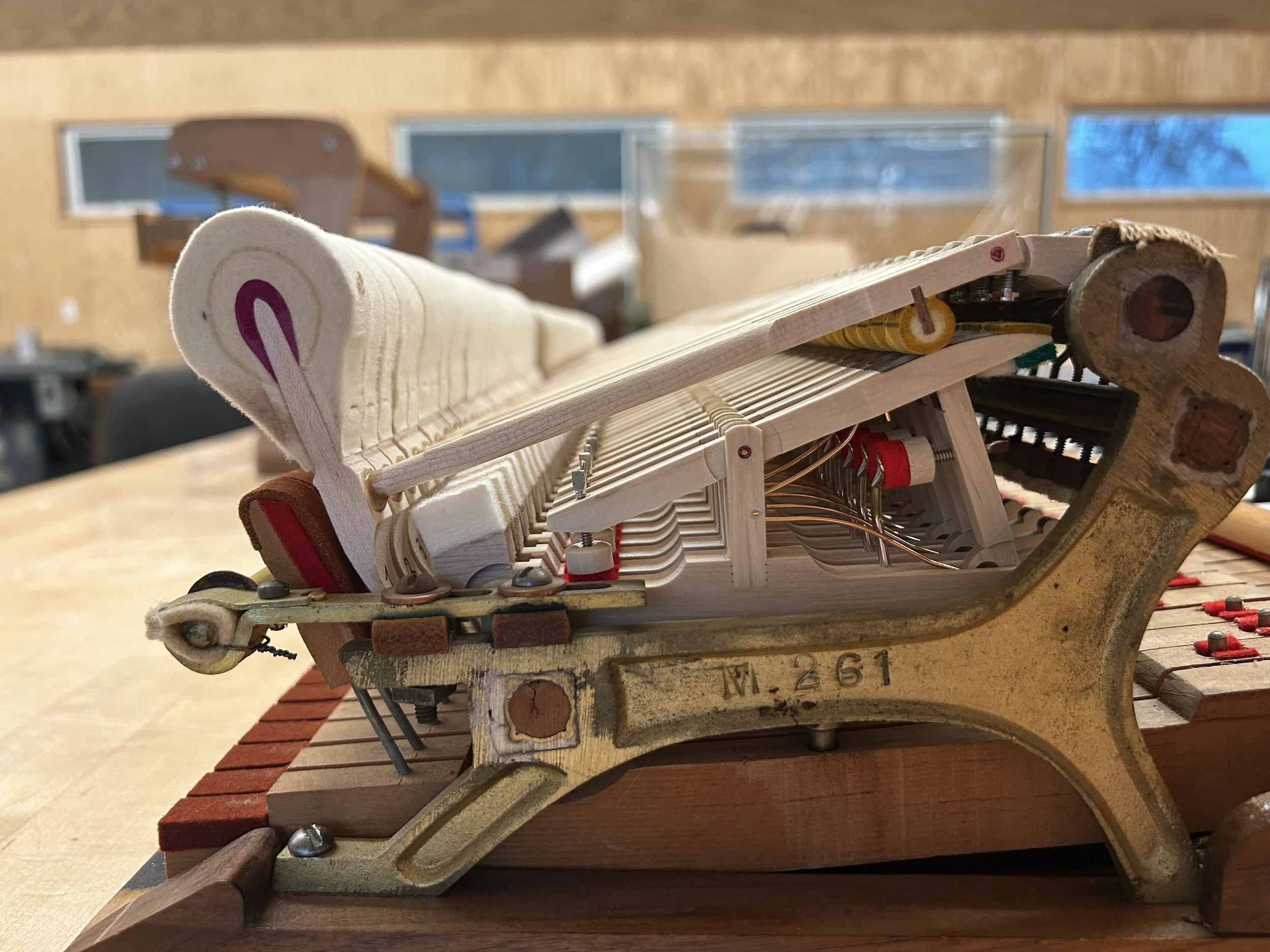
A side profile view of the restored action, revealing the complex engineering of a Steinway grand action. The new hammers and wippens with their bright white felts and blonde wood against the warm wood of the key sticks and action frame speaks to the craftsmanship that went into every detail of this restoration.
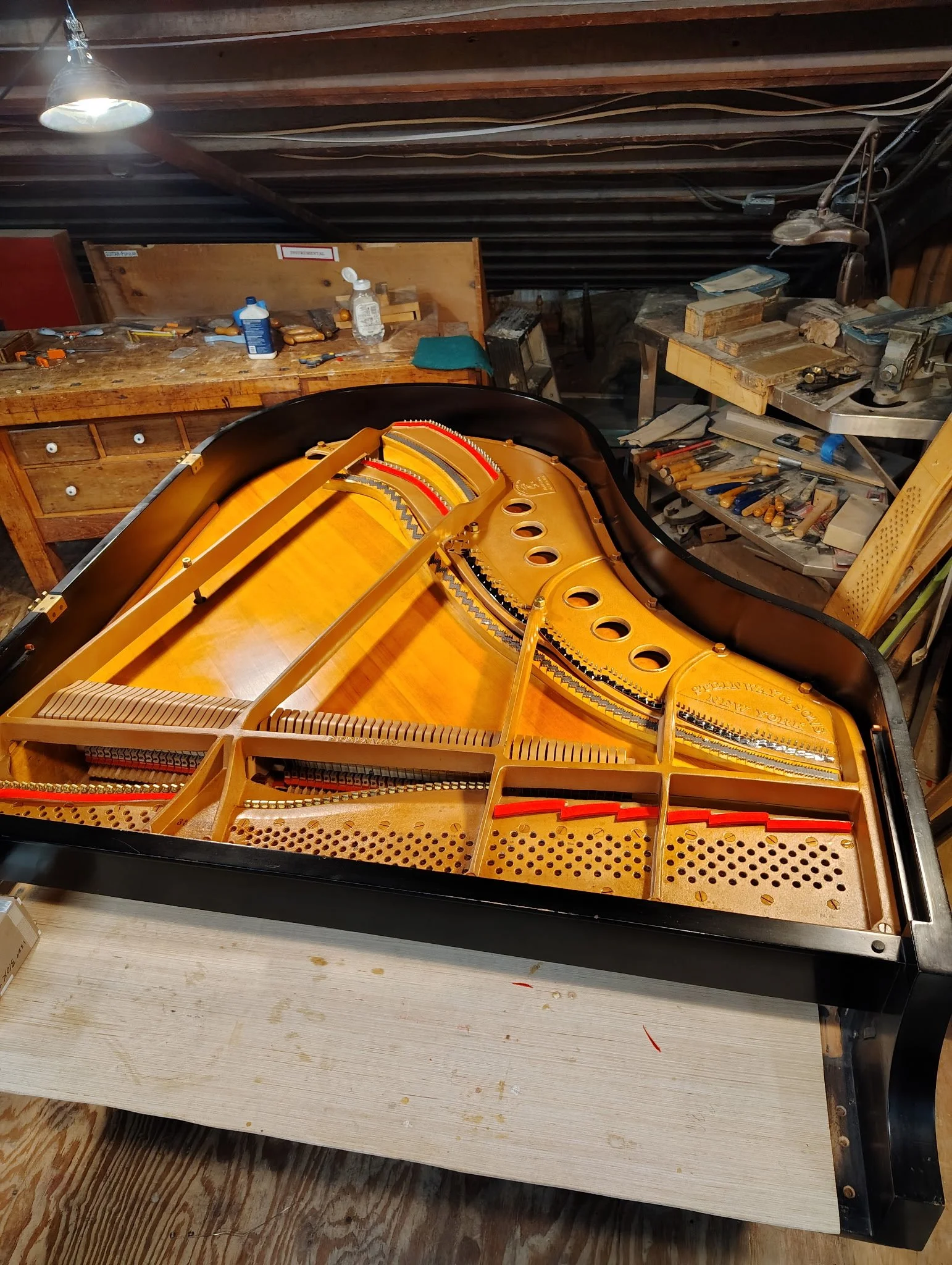
With the old strings removed and the interior thoroughly cleaned, the piano is ready to receive its new strings and tuning pins. The warm spruce soundboard and cast iron plate are revealed in their full glory.
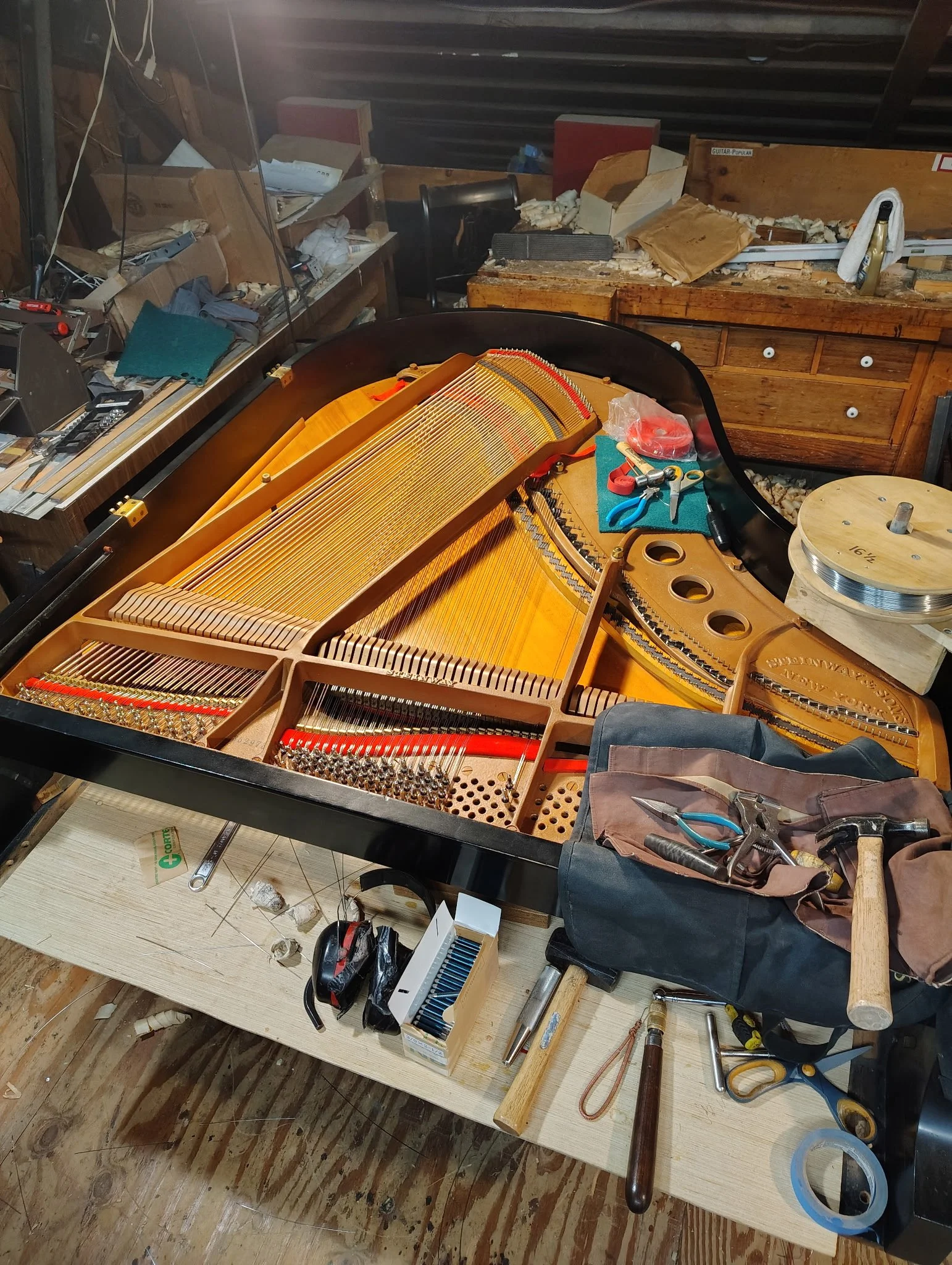
The restringing process underway. New music wire being carefully installed string by string. This painstaking work requires precision and patience, as each string must be wound to exact specifications to ensure proper tension and tonal consistency across the entire instrument.
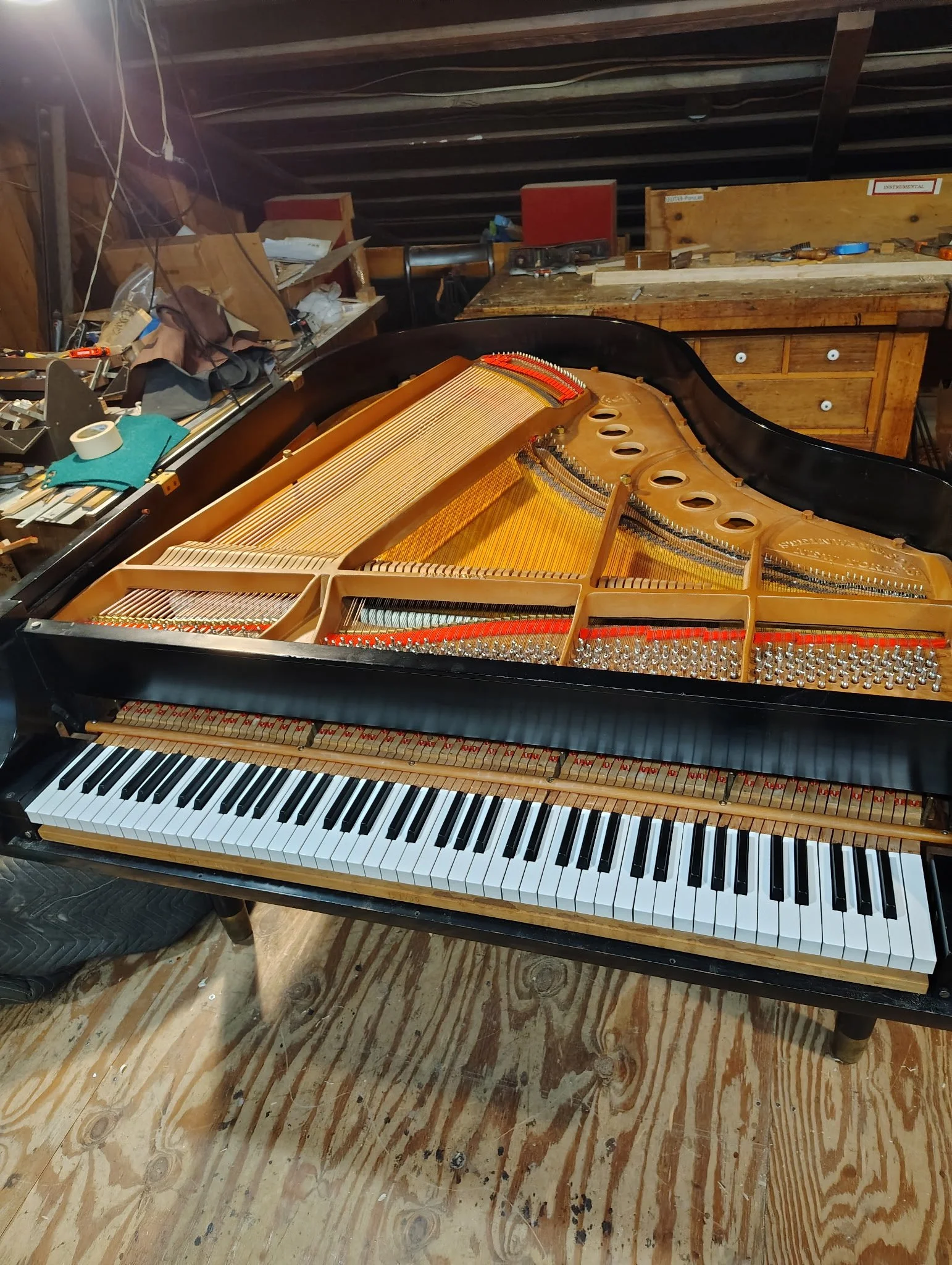
The restored 1956 Steinway M. With fresh strings gleaming across the soundboard, and the fully rebuilt action reinstalled. The piano has now been regulated, voiced, and tuned. Nearly 70 years of history, renewed.
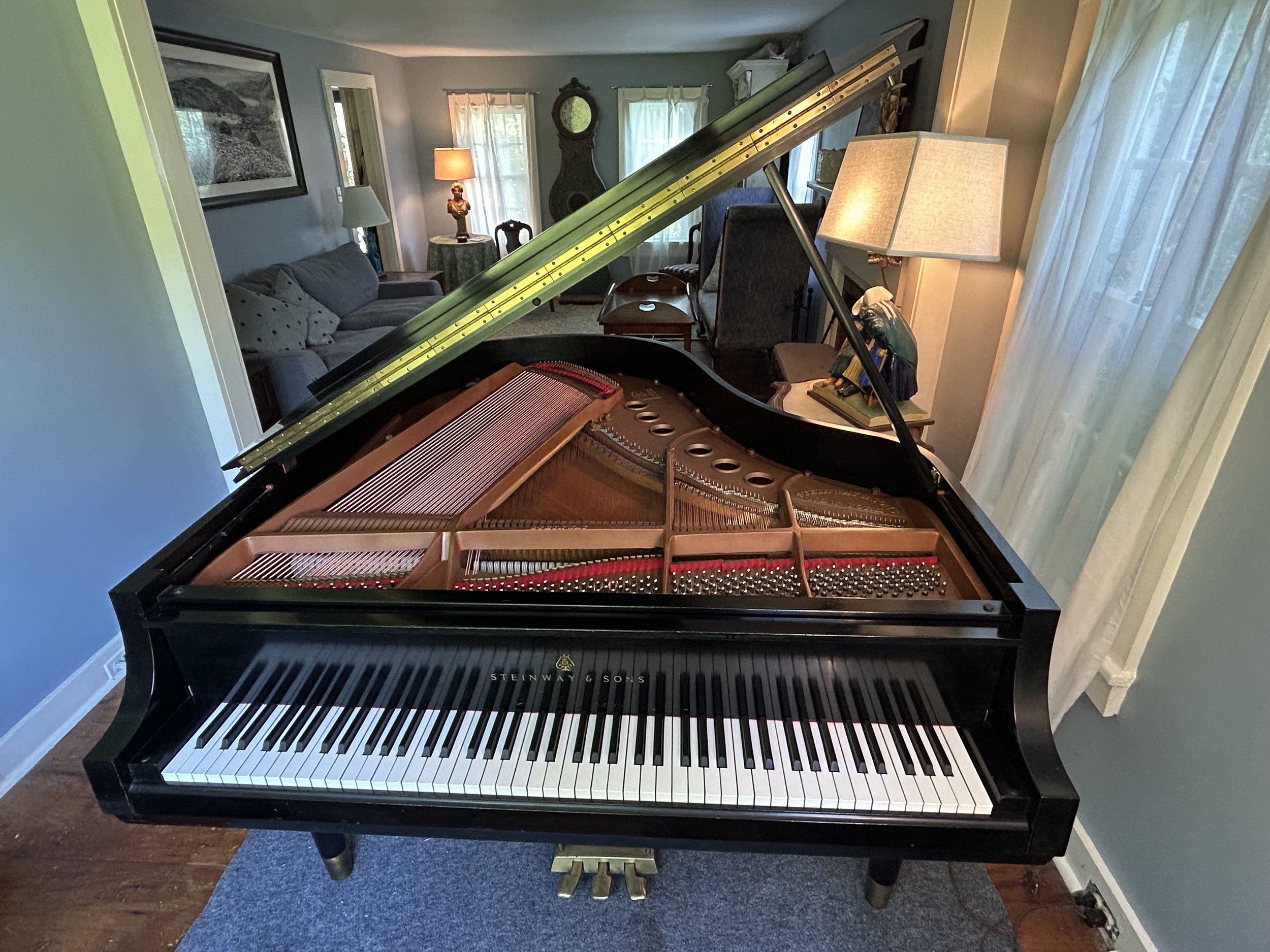
Home at last. The 1956 Steinway M, fully restored and back where it belongs. It’s ready to make music for decades to come.
If your piano has a story worth continuing, I’d love to help write the next chapter. Get in touch to discuss what’s possible.